What if the most effective antidote to a high-pressure career isn’t a temporary escape, but a deliberate, thermal shift within the walls of your own home? Most high-achievers recognise the heavy toll of chronic work-related stress and the persistent inability to truly switch off once the day concludes. You’ve likely found that standard, temporary wellness products often fail to provide the deep, restorative experience your body and mind demand. Utilising a master-crafted sauna for stress relief is not simply a luxury; it is a sophisticated method of physiological recalibration. This article explores how bespoke sauna therapy transforms the physiological stress response and why high-end wellness architecture is becoming the ultimate domestic retreat for the discerning individual. We will examine the intricate science of the thermal reset process, the role of precision Nordic engineering, and how a permanent sanctuary provides the immediate mental clarity required to thrive. By the end, you’ll understand why a custom-built installation is both a profound investment in your long-term health and a refined addition to your property’s value.
Key Takeaways
- Understand the biological “thermal reset” that occurs during heat therapy, effectively lowering cortisol levels and grounding the mind in the present moment.
- Identify whether a traditional, full spectrum infrared, or hybrid sauna for stress relief best suits your specific mental and physical recovery profile.
- Discover why bespoke, permanent wellness architecture provides a psychological sense of security and property value that temporary alternatives cannot replicate.
- Learn how premium engineering, including Narvi heaters and artisanal timber selection, ensures a consistent and soothing sensory experience.
- Gain practical guidance on integrating a private retreat into your home, including the optimal temperature and frequency protocols to maximise your restorative results.
The Science of Serenity: How Heat Therapy Counteracts Modern Stress
True restoration requires more than just a quiet room; it necessitates a physiological interruption of the stress cycle. This is what we define as the “Thermal Reset.” When you enter a high-heat environment, your body prioritises immediate survival and cooling. This intense physical demand forces the mind into the absolute present, effectively silencing the persistent background noise of work-related anxieties. It’s a deliberate shift from cognitive overload to sensory awareness.
The “sauna high” is a well-documented chemical transformation rather than a mere feeling. During a session, the body releases endorphins, our natural opiate-like chemicals. Simultaneously, the heat triggers the production of dynorphins. Whilst dynorphins initially create a sense of mild discomfort, they sensitise the brain’s opioid receptors. This process ensures that when you exit the heat, the lingering endorphin effect is significantly more profound and lasting. By lowering cortisol, the primary stress hormone, regular use of a sauna for stress relief becomes a foundational tool for hormonal regulation and mood stability.
Controlled heat stress acts as a catalyst for the parasympathetic nervous system, effectively signalling the body to disengage from its defensive posture and enter a state of profound physiological restoration.
The Autonomic Nervous System Shift
Most high-achieving professionals spend their days in a state of sympathetic dominance, often called “fight or flight.” Heat therapy reverses this through systemic vasodilation. As blood vessels expand to regulate internal temperature, blood pressure stabilises and heart rate variability (HRV) often improves. A higher HRV is a primary marker of a resilient, healthy nervous system. The transition is completed during the cooling phase. The contrast between intense heat and cool air provides the neurological balance required to reset your internal rhythm.
Neuroprotection and Mental Clarity
Beyond immediate relaxation, the heat triggers the production of Heat Shock Proteins (HSPs). These proteins act as cellular mechanics, repairing damaged proteins and protecting the brain from the oxidative stress caused by chronic tension. This molecular repair is a key reason why consistent sauna use is linked to improved mental resilience. In this digital-free sanctuary, the heat creates a “forced mindfulness.” Without the distraction of screens or notifications, the mind is allowed to wander, process, and eventually find a state of quiet clarity that is increasingly rare in the modern world.
The Rise of Wellness Architecture: A Shift Towards Intentional Sanctuaries
The concept of the home is evolving. In South Africa, we’re witnessing a significant shift towards “Wellness Real Estate,” where the focus moves from mere aesthetics to intentional recovery. High-end homeowners no longer view a sauna for stress relief as a luxury appliance. Instead, it’s treated as a vital architectural component of a balanced life. This shift reflects a deeper understanding that our physical environment directly dictates our mental state. It’s about creating a space that doesn’t just look beautiful, but actively facilitates health.
A permanent, custom-built structure offers a psychological sense of safety that portable or temporary units simply cannot provide. When a sanctuary is designed into the fabric of your home, it becomes a reliable anchor. It functions as a “Third Space”; a dedicated boundary between the high-pressure demands of the office and the intimate sanctuary of the family home. By stepping into a bespoke cabin, you’re physically and mentally leaving the day’s burdens behind. The permanence of the installation reinforces the habit of daily restoration.
The Psychology of Space and Texture
Materiality is the foundation of tranquility. Natural timbers like Nordic spruce or cedar aren’t chosen merely for their durability. Their scent and organic texture are essential for lowering heart rates and grounding the senses. Minimalist design further aids this process by reducing the cognitive load on the brain. When every line is clean and every joint is precise, the mind stops searching for “noise” and begins to settle. Integrating outdoor sauna installations into your garden allows for a seamless transition between the warmth of the timber and the natural world outside.
The Digital Detox Factor
In an era of constant connectivity, the sauna remains one of the few truly “analogue” spaces. It’s a refuge where blue light and notifications cannot follow. This absence of digital intrusion facilitates a level of mental restoration that is nearly impossible to achieve elsewhere. We design these spaces with silence in mind, considering acoustic insulation and the soft, indirect glow of recessed lighting to ensure the atmosphere remains meditative. The goal is to create an environment where the only thing you need to focus on is the rhythm of your own breath. Whilst the world outside remains frantic, the interior of your sanctuary remains still.
If you’re ready to transform a corner of your home into a permanent sanctuary, exploring bespoke sauna design is the first step toward a more intentional lifestyle.
Traditional, Infrared, or Steam? Tailoring the Heat to Your Stress Profile
Selecting a sauna for stress relief is a deeply personal decision. It requires an understanding of how different thermal environments interact with your specific psychological and physical state. Not all heat is created equal; the sharp, dry intensity of a traditional Finnish cabin offers a vastly different experience to the gentle, penetrative warmth of an infrared system. To choose correctly, you must first identify how your stress manifests. Is it a cognitive burden, or does it sit heavily in your muscles?
For many high-achieving individuals, stress presents as a “physically exhausted body” carrying deep-seated tension in the neck, shoulders, and back. Others struggle with an “anxious mind” that refuses to settle even after the laptop is closed. Identifying these patterns allows you to curate a sanctuary that addresses your specific needs. For those who desire the ultimate in sensory variation, a sauna and steam room combination provides the flexibility to switch between dry heat and restorative humidity, ensuring your recovery protocol is as nuanced as your lifestyle.
Traditional Finnish Saunas for Ritualistic Calm
The traditional electric sauna is the premier choice for silencing a racing mind. Operating at temperatures between 80°C and 100°C, these spaces demand total presence. The ritual of löyly—the steam created by pouring water over hot stones—creates a meditative rhythm that grounds the senses. We specify Narvi heaters for their exceptional build quality and ability to produce a soft, enveloping heat. This authentic approach ensures the air remains breathable whilst providing the intensity needed for a profound psychological reset.
Infrared and Hybrid Solutions for Modern Efficiency
Infrared technology is ideal for those prioritising deep-tissue tension release at lower, more manageable temperatures. Full spectrum panels target near, mid, and far-infrared wavelengths, warming the body directly rather than the air. This facilitates a heavy sweat and muscle relaxation without the intense heat of a traditional stove. For ultimate versatility, hybrid saunas combine traditional heaters with full spectrum infrared panels. This allows you to choose between a ritualistic steam session or a quick, penetrative heat treatment, ensuring your sanctuary adapts to your daily requirements perfectly.
Whether you prefer the ancestral ritual of the stone or the modern precision of the infrared wave, the goal remains the same. It’s about creating a dedicated space where the external world cannot reach you. By tailoring the modality to your stress profile, you ensure that every session delivers the maximum restorative benefit, leaving you clear-headed and physically renewed.
The Sensory Alchemy of Stress Relief: Timber, Light, and Nordic Engineering
What defines a truly restorative sanctuary? It’s the silent intersection of precision engineering and natural materials. A high-quality sauna for stress relief is defined by the quality of its “Löyly”—the steam and heat profile that emanates from the stones. When engineering is prioritised, the heat feels like a soft, invisible weight that relaxes the muscles without agitating the lungs. Cheap components often result in a “harsh” or “suffocating” atmosphere, which can ironically increase physical discomfort rather than alleviate it. To achieve a state of calm, every sensory touchpoint must be intentional.
The “engine” of the experience is the heater. We believe that consistent, soothing heat is the foundation of mental clarity. This is why we focus on high stone capacity and superior airflow. When the air remains oxygen-rich, you can breathe deeply and stay in the heat longer, allowing the “thermal reset” discussed earlier to take full effect. Lighting is the final layer of this sensory alchemy. By utilising soft, indirect glow and chromotherapy—the use of colour to influence mood—we can tailor the environment to either energise the spirit or deeply quieten the mind.
Narvi: The Gold Standard of Nordic Heating
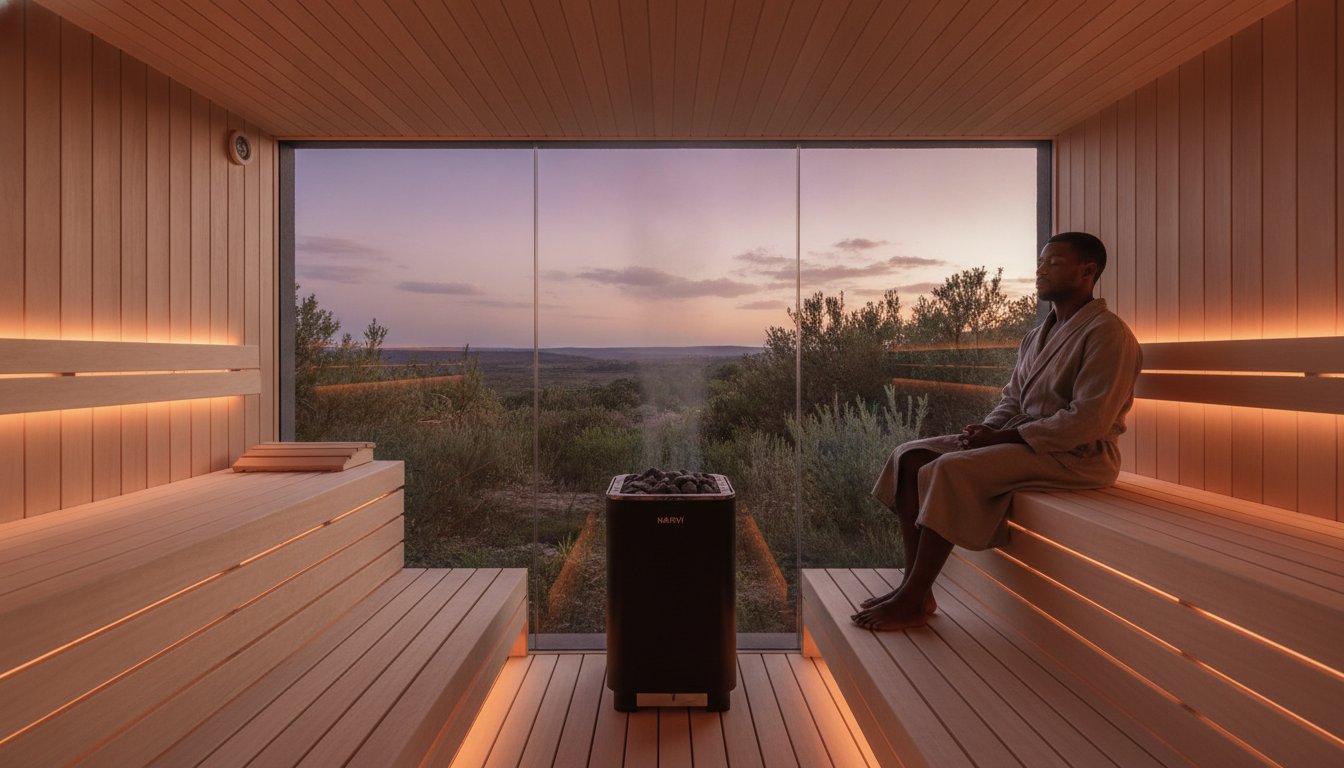
Narvi heaters represent the pinnacle of Finnish craftsmanship. Unlike standard electric heaters that rely on exposed, glowing elements, Narvi units are designed with a massive stone capacity. This ensures the heat is stored and released slowly, creating a “Soft Heat” that is far more comfortable for the user. Because the engineering is so robust, it facilitates a more oxygen-rich environment. It’s easier to breathe, which is essential for maintaining a meditative state. Choosing such durable, premium components also provides long-term peace of mind, knowing your sanctuary is built to last for decades.
Aesthetic Harmony and Material Integrity
Timber selection is a critical component of the stress-relief ritual. We utilise kiln-dried, premium Nordic woods that resist warping even under extreme temperature fluctuations. The scent of natural spruce or cedar is inherently grounding, providing an immediate olfactory signal to the brain that it’s time to rest. The tactile experience is just as vital; the smoothness of a well-finished bench allows for total physical comfort. By incorporating glass facades and hidden lighting, we create a sense of expansive calm. The eyes are not met with clutter, but with clean lines and organic textures that reduce cognitive load.
If you value the intersection of traditional heritage and modern performance, you can view our range of Narvi heaters and discover how the right engine transforms the sauna experience.
Creating Your Private Retreat: Integration and Daily Rituals
Integrating a permanent wellness space into your lifestyle is the final step in securing a long-term strategy for mental resilience. Whether you choose an indoor integration or an outdoor oasis depends on your personal definition of a “Third Space.” An outdoor installation offers a literal departure from the domestic environment, whilst an indoor cabin provides seamless accessibility during a busy week. Regardless of the location, the goal remains the same: a dedicated environment for a physiological reset. When planning your bespoke sauna for stress relief, consider the flow of the entire session, from the initial heat to the final moment of rest.
To effectively use a sauna for stress relief, consistency is more important than intensity. Most users find that a 20-minute session at 80 to 90°C, repeated three times per week, provides a noticeable cumulative effect on mood and sleep quality. Combining this with deliberate breathwork or a cold contrast, such as a cool shower or plunge, amplifies the parasympathetic shift we explored in the opening sections. This contrast training is the key to building a more resilient nervous system.
The Ritual of the Session
The three-cycle method is the gold standard of Nordic recovery. We recommend spending 15 minutes in the heat, followed by a brief cold exposure, and 15 minutes of quiet rest. Repeat this cycle three times. This process trains the nervous system to move efficiently between stress and relaxation. Hydration is critical; drink mineral-rich water before and after to sustain the sense of calm. You might also introduce essential oils like eucalyptus or birch to the water before pouring it over the stones to deepen the sensory experience through aromatherapy.
Professional Design and Installation
A bespoke sanctuary requires more than just timber and a heater. Professional builders are essential to manage the technical complexities of ventilation and drainage, ensuring the air stays fresh and the structure remains durable. During the consultation, your specific wellness goals are translated into a physical floor plan that respects the architecture of your home. This isn’t just a construction project; it’s an investment in a legacy of health. A custom-built sauna is a gift to your future self, providing a reliable retreat that adds both personal and property value for decades to come.
Investing in Your Long-Term Mental Resilience
The transition from chronic tension to mental clarity begins with an intentional decision to prioritise your physical environment. We’ve explored how the “thermal reset” of a high-end sauna for stress relief recalibrates the nervous system, moving the body from a state of high alert to profound restoration. By selecting the correct modality and integrating it through bespoke architecture, you create more than just a room. You curate a private sanctuary that serves as a permanent boundary against the frantic pace of the external world.
As the exclusive South African importer of Narvi Nordic heaters, we ensure that the engine of your retreat meets the highest Finnish standards. Our expert designers are dedicated to crafting permanent indoor and outdoor wellness spaces that honour both traditional heritage and modern performance. This is an investment in your future health and the enduring value of your property, ensuring your home remains a place of true recovery.
Begin your journey to a bespoke stress-relief sanctuary today.
Take the first step toward a lifestyle defined by clarity, vitality, and a sense of enduring tranquility.
Frequently Asked Questions
How long should I stay in a sauna for effective stress relief?
Staying in the heat for 15 to 20 minutes is generally the optimal duration for achieving a profound physiological benefit. This timeframe allows the body to reach a core temperature high enough to trigger the release of Heat Shock Proteins and endorphins without causing unnecessary exhaustion. Beginners should start with shorter sessions of 5 to 10 minutes, gradually increasing their duration as they become accustomed to the thermal environment of their private sanctuary.
Is a traditional sauna or an infrared sauna better for anxiety?
Traditional saunas are often more effective for immediate psychological grounding because the ritualistic heat forces an absolute focus on the present moment. The intense environment of a traditional cabin, especially when using a high-quality Narvi heater, provides a sharp “thermal reset” that effectively silences a racing mind. Conversely, infrared saunas offer a gentler, more penetrative warmth that may be preferable for those who find extreme heat agitating rather than restorative.
Can regular sauna use help with chronic work-related burnout?
Yes, regular use of a sauna for stress relief directly counteracts the physiological markers of burnout by lowering systemic cortisol. By forcing the body into a parasympathetic “rest and digest” state, heat therapy allows the nervous system to recover from prolonged sympathetic dominance. This consistent recovery ritual helps rebuild mental resilience and emotional capacity, providing a necessary buffer against the demands of a high-pressure career.
How often should I use my home sauna to see mental health benefits?
Utilising your sauna three to four times per week is the recommended frequency for sustained mental health improvements. Research suggests that this regular cadence provides cumulative benefits for mood regulation and sleep quality. Establishing a consistent schedule ensures that the “thermal reset” becomes a reliable anchor in your weekly recovery protocol, allowing you to maintain a state of calm regardless of external pressures.
Do saunas actually lower cortisol levels in the body?
Clinical observations confirm that cortisol levels drop significantly following a standard 20-minute sauna session. Whilst the heat initially acts as a mild stressor, the subsequent cooling phase triggers a profound relaxation response. This hormonal shift is essential for reducing the physical symptoms of chronic tension and promoting a sense of enduring tranquillity that lasts well beyond the session itself.
What is the best temperature for a relaxation-focused sauna session?
For a traditional sauna, a range between 80°C and 90°C is ideal for deep relaxation. This temperature allows for the creation of soft, soothing steam without the air feeling overly aggressive or harsh. If you’re using an infrared system, a lower temperature of 45°C to 60°C is sufficient. This is because the radiant heat warms the body directly rather than the surrounding air, facilitating a deep sweat at a more manageable intensity.
Can I use a sauna for stress relief if I have high blood pressure?
Individuals with high blood pressure must consult a medical professional before beginning a heat therapy regimen. Whilst the vasodilation caused by the heat can temporarily lower blood pressure, the sudden change in temperature can also place a strain on the cardiovascular system. A supervised, gradual approach is always the safest path for those with underlying health conditions, ensuring the experience remains restorative rather than risky.
Why is a custom-built sauna better for relaxation than a portable unit?
A custom-built sauna for stress relief provides a superior sensory environment that portable units simply cannot replicate. The use of premium, kiln-dried timbers and precision Nordic engineering creates a stable, oxygen-rich atmosphere that facilitates deeper breathing and mental stillness. The permanence of a bespoke sanctuary offers a psychological sense of security. It establishes a dedicated physical boundary that supports your daily recovery ritual and long-term health.