
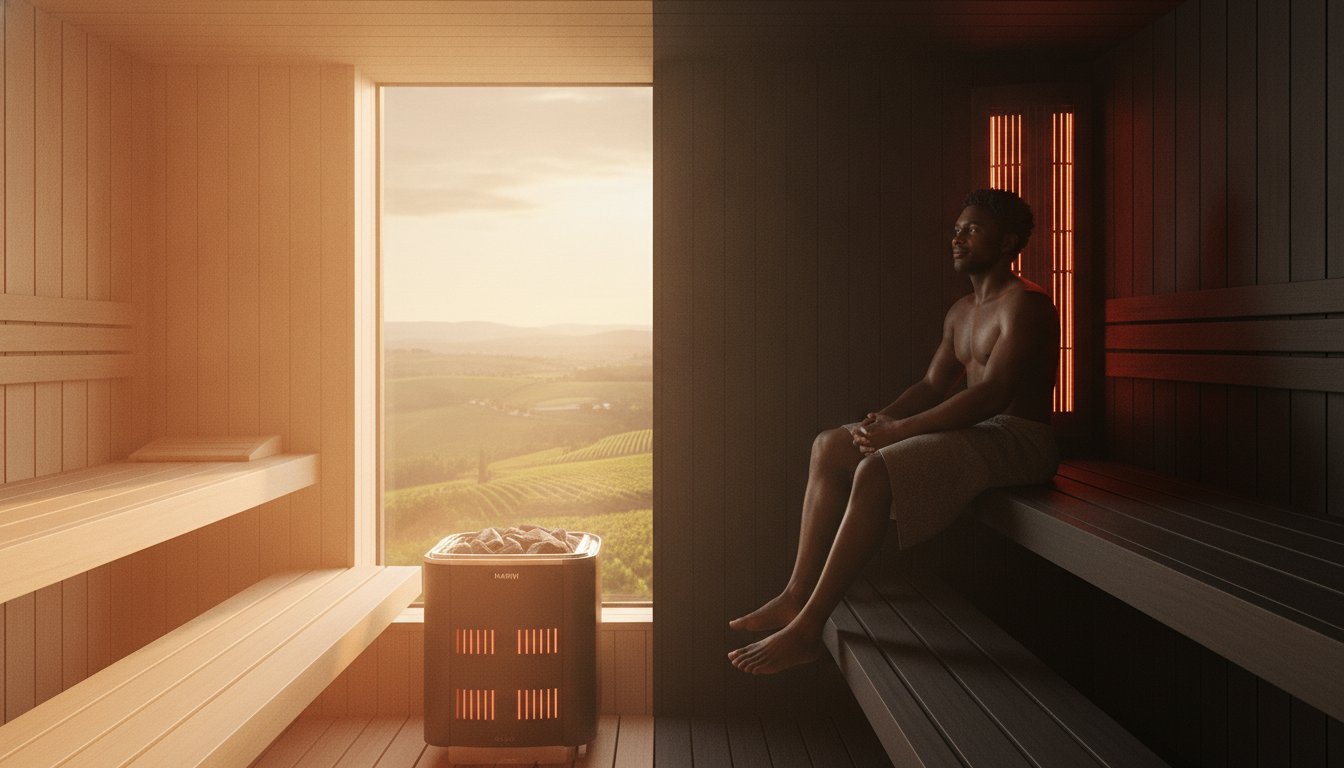
The most profound wellness transformations don’t happen at the highest temperatures, but within the most intentional environments. You likely recognise that a home sauna is more than a luxury; it’s a sanctuary for mental and physical renewal. The challenge lies in the deluge of conflicting health claims and technical specifications that can make the selection process feel clinical rather than restorative. It’s natural to seek certainty before investing in a technology that must offer both longevity and aesthetic grace.
This electric vs infrared sauna comparison cuts through the noise to help you distinguish between atmospheric intensity and cellular penetration. You’ll gain a clear understanding of how traditional electric heat creates a sensory ritual whilst modern full spectrum infrared offers targeted efficiency. We will examine the heritage of Narvi heaters, the realities of energy consumption in South Africa, and the bespoke potential of hybrid systems. This guide provides the confidence to choose a sanctuary that reflects your commitment to quality and your unique path to restoration.
Key Takeaways
- Understand the fundamental distinction between atmospheric convection heat and direct radiant warmth to align your choice with your physical recovery needs.
- Use this comprehensive electric vs infrared sauna comparison to evaluate warm-up times, humidity preferences, and the specific sensory experience of each system.
- Learn why premium Narvi heaters and full spectrum infrared technology represent the pinnacle of durability and therapeutic performance in a bespoke home installation.
- Discover the advantages of a hybrid sanctuary, which integrates both heating methods to offer a versatile wellness ritual tailored to your daily requirements.
The Heat Debate: Understanding Atmospheric vs Radiant Warmth
To begin a meaningful electric vs infrared sauna comparison, we must first examine the physics of restoration. The fundamental difference lies in how energy moves from the source to your skin. Traditional electric saunas rely on convection, whilst infrared systems utilise radiant energy. This distinction dictates the humidity, the duration of your session, and the physiological response of your body. Choosing between them is not a matter of finding the better technology, but rather selecting the thermal environment that best facilitates your personal ritual of renewal.
In a premium installation, thermal mass plays a vital role. This refers to the ability of materials, such as the dense stones in a Narvi heater or high-quality timber, to retain and slowly release heat. Without sufficient thermal mass, a sauna feels thin and fragile. With it, the environment feels substantial and enveloping. This creates a sense of quiet luxury that prioritises substance over fleeting trends, ensuring your investment remains a cornerstone of your home for decades.
What is Convection Heat?
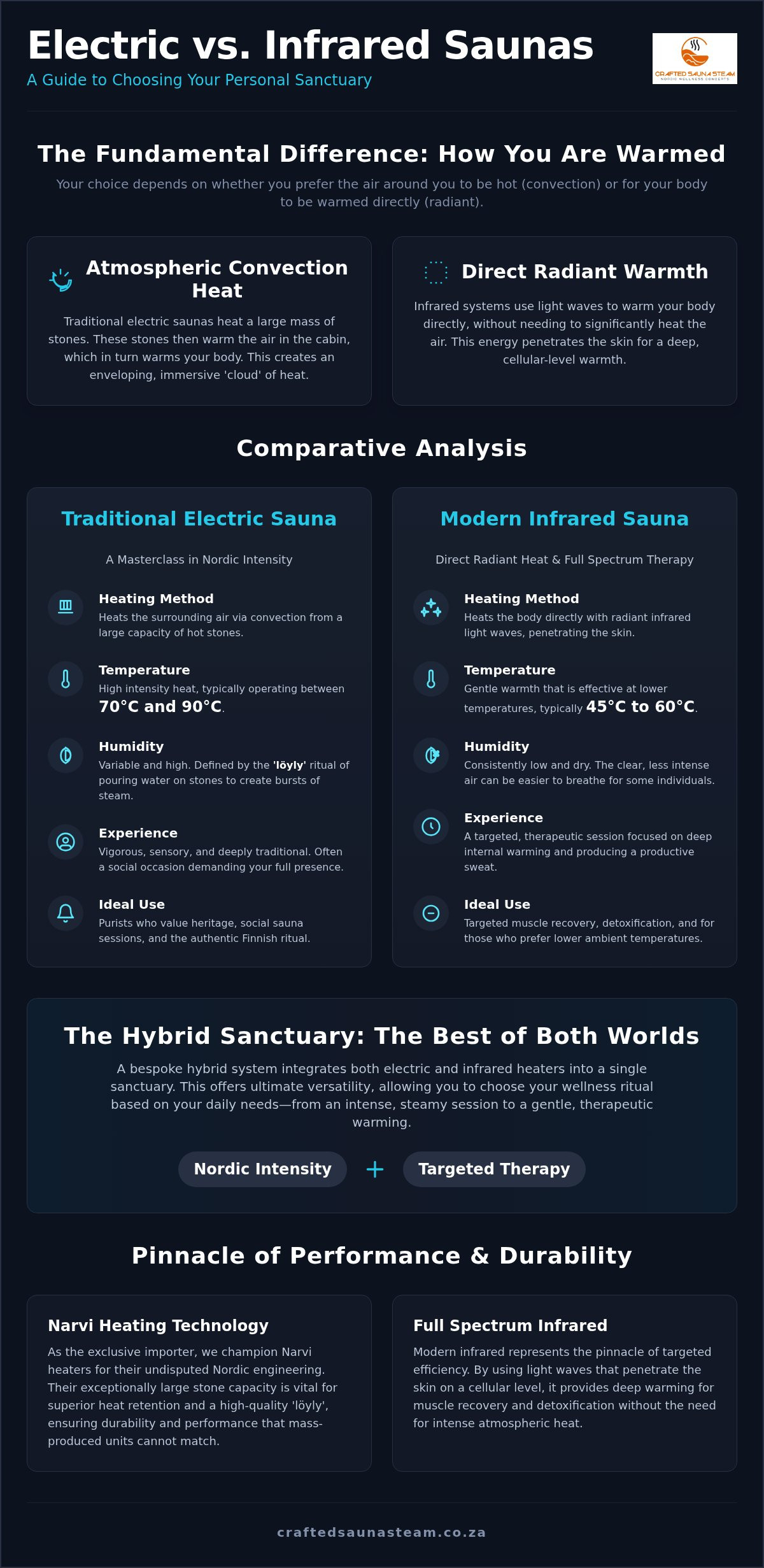
Electric heaters are the heartbeat of the traditional Finnish experience. These systems use internal elements to heat a large volume of stones, which in turn warm the air. This process creates a ‘cloud’ of atmospheric warmth that circulates throughout the cabin. As the air temperature rises, typically between 70°C and 90°C, the environment becomes intensely immersive. The highlight of this method is the ‘löyly’, the steam created by pouring water over the hot stones. This ritual provides a sudden burst of humidity and heat, a sensory experience that defines the heritage of sauna culture. It’s a vigorous, external heat that challenges and then relaxes the body through intense perspiration.
What is Radiant Heat?
Infrared technology takes a different approach by using light waves to warm the body directly. Unlike convection, radiant heat doesn’t require the air to reach high temperatures to be effective. Instead, the waves travel through the space and penetrate the skin on a cellular level. This allows for a deep, productive sweat at much lower ambient temperatures, often between 45°C and 60°C. For those who find the heavy, humid air of a traditional sauna difficult to breathe, infrared offers a clear, comfortable alternative. It’s a targeted therapy that focuses on internal warming, making it an excellent choice for sauna for muscle recovery and detoxification without the atmospheric intensity of a stone-based heater.
The Traditional Electric Sauna: A Masterclass in Nordic Intensity
Traditionalists often view the sauna not merely as a piece of wellness equipment, but as a cultural heritage to be preserved. In any electric vs infrared sauna comparison, the electric model stands as the guardian of the original Finnish ritual. It operates at vigorous temperatures between 70°C and 90°C, creating a dry heat that you periodically punctuate with the release of steam. This is the heart of the experience. The scent of heated timber fills the air. The sharp hiss of water meeting stone provides a rhythmic backdrop to your restoration. It’s an environment that demands your full presence, rewarding you with a profound sense of accomplishment and physical lightness.
The longevity of these systems is a testament to their simple, robust engineering. Unlike the complex electronics found in lower-end technology, a high-quality electric sauna relies on the integrity of its materials and the thermal mass of its stones. This makes them the definitive choice for those who value heritage and wish to invest in a sanctuary that will serve their family for decades. The experience is tactile, sensory, and deeply grounded in tradition.
The Power of Narvi Heating Technology
We choose to be the exclusive importer of Narvi heaters because they represent the undisputed pinnacle of Nordic engineering. These heaters are the engine of the environment. Their design prioritises an exceptionally large stone capacity, which is vital for superior heat retention and the quality of the steam, or löyly. For the South African homeowner, Narvi offers a level of durability and performance that mass-produced alternatives simply cannot match. These units aren’t just functional; they serve as a visual centrepiece, reflecting a commitment to meticulous craftsmanship and aesthetic refinement.
Ideal Use Cases for Electric Systems
Electric systems are the premier choice for those who view sauna time as a social occasion. They provide the power and space needed for multiple occupants to enjoy the heat simultaneously without a drop in environmental quality. If you’re planning a bespoke outdoor sauna installation, the electric heater provides the necessary atmospheric intensity to overcome external temperature fluctuations. It’s perfectly suited for:
- Social wellness rituals involving family or friends.
- Individuals who crave the sensory contrast of high heat and sudden steam.
- Outdoor environments where the heater must compete with the elements.
- Homeowners seeking a permanent, heritage-grade addition to their property.
The Infrared Revolution: Direct Radiant Heat and Full Spectrum Therapy
Whilst traditionalists cherish the stone-heated cabin, the modern wellness enthusiast often seeks a different physiological response. The infrared revolution shifts the focus from heating the air to heating the body itself. This method uses light waves to penetrate the skin directly; it doesn’t rely on high ambient temperatures to induce a sweat. This fundamental shift is central to any electric vs infrared sauna comparison because it changes the very nature of the heat from an external force to an internal experience. It’s a sophisticated evolution that prioritises efficiency and targeted recovery.
This direct warming leads to the ‘deep sweat’ phenomenon. Because the radiant energy penetrates several centimetres into the tissue, it mobilises toxins and stimulates cellular repair more effectively than ambient heat alone. It’s a precise, clinical approach to restoration. For those with a demanding professional life, the convenience is unmatched. Most infrared systems are ready for use in roughly 15 minutes. This allows for a spontaneous wellness session without the 45-minute wait required for a traditional heater to reach its peak temperature. Athletes and active individuals will find particular value in understanding the science of sauna for muscle recovery and how infrared heat accelerates post-workout restoration at the cellular level.
Full Spectrum vs Far Infrared
Full spectrum technology represents the pinnacle of this category. Many entry-level models only offer far-infrared waves, which are excellent for relaxation but limited in scope. Full spectrum saunas include near and mid-infrared wavelengths as well. Near-infrared is prized for skin rejuvenation and collagen production, whilst mid-infrared targets the soft tissue to increase circulation and reduce inflammation. We prioritise high-output emitters that deliver this entire range, ensuring your sanctuary provides a comprehensive therapeutic benefit rather than a single-note experience.
The Infrared Environment
The air within an infrared cabin remains remarkably clear and easy to breathe. Operating at lower temperatures, typically between 45°C and 60°C, the environment is far easier on the respiratory system than a traditional steam-filled room. It’s an ideal solution for individuals who find the intense heat of a Finnish sauna overwhelming or claustrophobic. When conducting an electric vs infrared sauna comparison for an indoor suite, the lack of steam and lower temperatures make infrared a versatile choice for contemporary homes. If you are uncertain which technology aligns with your lifestyle, exploring how to choose a home sauna can provide further clarity on the architectural and wellness implications of your choice.
Comparative Analysis: Humidity, Temperature, and Operational Rituals
The true value of a home sanctuary reveals itself in the practicalities of daily use. Whilst previous sections explored the physiological benefits, this electric vs infrared sauna comparison focuses on the operational rituals that define your experience. Time is often the deciding factor for many. An infrared session is ready in roughly 15 minutes. It’s a spontaneous solution for a busy evening. Traditional electric systems require a more patient approach; you’ll need to allow 45 minutes or more for the stones to reach their peak. This period of anticipation is, for many, an essential part of the restorative process.
Humidity also separates these two worlds. In a traditional cabin, you control the atmosphere. You decide when to introduce steam. Infrared environments remain strictly dry. This lack of moisture is easier on the timber over long periods, but it lacks the sensory bloom of a wet sauna. Choosing between them requires an honest assessment of whether you prefer a quick, efficient sweat or a slow, immersive ceremony.
Operational Costs and Efficiency
In the South African context, energy consumption is a valid consideration. A premium electric heater typically pulls between 4.5kW and 9kW depending on the cabin size. Infrared emitters are significantly more modest, often requiring only 1.5kW to 3kW. However, the total cost isn’t just about the heater’s draw. We focus on meticulous insulation and superior timber thickness to ensure heat retention. A well-constructed cabin with 40mm timber walls will consume far less power than a thin, mass-produced alternative. Quality construction is an act of stewardship; it protects both your investment and the environment. If you’re looking to optimise your home wellness installation, selecting the right balance of power and insulation is paramount.
The Maintenance Ritual
Longevity is born from care. When performing an electric vs infrared sauna comparison for long-term ownership, the durability of the heat source is a key differentiator. Electric heaters require you to inspect and re-stack the stones every year or two. Over time, heat cycles cause stones to crack; replacing them ensures the airflow remains efficient and the elements are protected. Infrared maintenance is simpler but requires a delicate touch. Emitters should be kept free of dust and perspiration to maintain their spectral output. Regardless of the heating method, timber preservation is the most critical task. We recommend high-quality, non-toxic sauna oils to prevent the wood from becoming brittle in the intense dry heat of an infrared unit or the fluctuating humidity of an electric one.
Bespoke Integration: Why a Custom Hybrid Might Be Your Perfect Sanctuary
The conclusion of any electric vs infrared sauna comparison often leads to a singular realisation: your wellness needs are rarely static. On a brisk Monday morning, you might require the immediate, cellular warmth of infrared to prepare for a demanding day. By Saturday evening, the soul often craves the slow, atmospheric ritual of a stone-heated Finnish cabin. A hybrid sauna removes the need for compromise. It integrates Narvi electric heaters with full spectrum infrared emitters into a single, masterfully crafted environment. This dual-technology approach ensures your sanctuary remains relevant to your lifestyle, regardless of how your health goals evolve.
Bespoke construction is the only way to achieve this level of integration successfully. It’s not a matter of simply placing infrared panels inside a traditional room. It requires a deep understanding of thermal dynamics and material resilience. We ensure that the placement of emitters doesn’t interfere with the airflow of the convection heater; we also ensure the timber is seasoned to withstand both intense dry heat and high humidity. This is where the Master Artisan’s touch becomes essential. We create a permanent wellness facility that functions as a cohesive whole, rather than a collection of disparate parts.
The Best of Both Worlds
Lifestyle flexibility is the greatest luxury a hybrid system provides. You can utilise the infrared emitters for a targeted 20-minute recovery session after a morning workout, benefitting from the deep tissue penetration without the wait. When time allows, you can engage the Narvi heater to transform the space into a traditional steam room. It’s the ultimate in versatility. You have the power to choose between a clinical wellness tool and a sensory heritage ritual at the touch of a button. This adaptability is particularly valuable in the South African climate, where your heating requirements may shift with the seasons.
The Crafted Sauna Steam Approach
Our process begins with your vision and ends with an enduring legacy. We don’t provide temporary solutions; we curate high-end, permanent environments that enhance the value of your property. Every detail, from the selection of premium timber to the precise calibration of the heating elements, is handled with meticulous care. This artisanal focus ensures that your installation is as beautiful as it is functional. For those seeking to ground their home in tradition, our guide to an authentic traditional Finnish sauna in South Africa offers a deeper look into the heritage we bring to every bespoke project. Your path to restoration deserves a sanctuary that is as unique as your own ritual.
Crafting Your Personal Sanctuary of Heat
Selecting the right thermal environment is a definitive step toward a more intentional lifestyle. As this electric vs infrared sauna comparison has explored, the choice rests on whether you value the atmospheric ritual of a traditional Finnish room or the targeted, efficient recovery of full spectrum infrared therapy. Whilst one offers sensory intensity, the other provides cellular penetration; both are valid paths to profound physical and mental renewal.
We specialise in bridging the gap between ancient tradition and modern performance. As the exclusive South African importer of Narvi heaters and experts in full spectrum infrared technology, we possess the technical expertise to design and construct a permanent wellness facility that matches your highest standards. Our commitment to artisanal craftsmanship ensures a result of enduring quality and quiet luxury, providing you with a sanctuary that functions as a reliable partner in your health journey.
Begin your journey toward a bespoke sauna sanctuary with Crafted Sauna Steam and transform your home into a centre for lasting restoration. Your vision of the perfect ritual is within reach.
Common Enquiries Regarding Sauna Technology
Is an electric sauna or an infrared sauna better for weight loss?
Infrared saunas are generally more efficient for weight loss because the radiant heat penetrates the body directly; this raises the core temperature and heart rate more effectively at lower ambient temperatures. Whilst both systems stimulate perspiration, the deep cellular penetration of a full spectrum infrared system can facilitate a higher caloric expenditure during a standard 30 minute session. It’s a targeted approach that prioritises metabolic stimulation over atmospheric intensity.
Can I convert my traditional electric sauna into an infrared one later?
Converting a traditional electric sauna into an infrared one is technically possible but often impractical due to the specific wiring requirements and the placement of radiant emitters. A more sophisticated approach is to invest in a hybrid sauna from the outset. This allows for a seamless integration of both technologies within a single, bespoke timber cabin without compromising the structural integrity or the aesthetic refinement of the room.
Which sauna type is easier to maintain in the South African climate?
Both sauna types are manageable in the South African climate, but infrared systems are slightly easier to maintain because they don’t involve the high humidity levels associated with steam. In coastal regions, the lack of moisture in an infrared unit can help preserve the timber for longer. However, traditional electric saunas equipped with Narvi heaters are exceptionally durable if the stones are inspected annually and the wood is treated with high quality, non toxic sauna oils.
How much ventilation is required for an electric vs infrared sauna?
Electric saunas require more robust ventilation to facilitate the convection process and manage the steam produced during the ritual. You’ll typically need an intake vent below the heater and an exhaust vent on the opposite wall. Infrared units require minimal ventilation; they only need enough airflow to ensure the air remains fresh and comfortable for the occupant during the session without losing the direct radiant heat.
Is infrared heat safe for children and the elderly?
Infrared heat is widely considered safe for both children and the elderly due to its lower operating temperatures and breathable atmosphere. The radiant heat warms the body without the oppressive intensity of a 90°C traditional environment. It’s always advisable to consult a medical professional for those with underlying conditions; the gentle nature of infrared is often the preferred choice for sensitive individuals who find high heat overwhelming.
Does an electric sauna increase the humidity in my home significantly?
An electric sauna will temporarily increase the humidity in your home if you use the ‘wet’ sauna method, but this is easily managed with correct ventilation. When you pour water over Narvi stones, the resulting steam is largely contained within the cabin. Provided the room is vented to the outside or a well ventilated area, the impact on your home’s ambient humidity is negligible and clears quickly after the session.
What is the typical lifespan of a Narvi heater compared to infrared panels?
A Narvi heater can last for several decades provided the elements are protected and the stones are replaced periodically. These Finnish engineered units are built for heritage grade longevity. In this electric vs infrared sauna comparison, infrared emitters also offer impressive durability; high output full spectrum emitters are typically rated for thousands of hours of use, which often outlasts the timber cabin itself in a residential setting.
Can I install an infrared sauna outdoors?
You can install an infrared sauna outdoors provided the structure is custom built to withstand environmental exposure. Standard indoor infrared kits are not suitable for the South African sun or rain. A bespoke outdoor installation requires specialised roofing, superior insulation, and weather treated timber to ensure the sensitive emitters remain protected and the unit operates efficiently even when the external air is cool.
Pingback: Authentic Traditional Finnish Sauna in South Africa: A Guide to Bespoke Wellness
July 25, 2026[…] a deeper understanding of how traditional electric heat compares to modern infrared technology, our electric vs infrared sauna comparison provides the clarity needed to make a truly informed decision for your bespoke […]
Pingback: Sauna for Muscle Recovery: The Science of Post-Workout Restoration
July 26, 2026[…] the body to focus its energy on synthesis rather than just damage control. When deciding between a sauna vs steam room for this purpose, consider that the dry, intense heat of a traditional or infrared room often […]
Pingback: How to Choose a Home Sauna: A Sophisticated Guide to Premium Wellness
July 26, 2026[…] cellular repair and optimises systemic restoration between training sessions. For a detailed electric vs infrared sauna comparison that examines atmospheric intensity against cellular penetration, our dedicated guide provides the […]