

True athletic excellence isn’t forged solely in the heat of the training session; it’s refined in the deliberate silence of the recovery period. You’ve likely felt that familiar, heavy ache of Delayed Onset Muscle Soreness (DOMS) that lingers for days, frustrating your desire to return to the gym or the trail. It’s a common struggle for those pushing their physical limits, where the body’s natural repair cycle feels agonisingly slow whilst fatigue begins to cloud your mental focus. Many athletes are now turning to a bespoke sauna for muscle recovery to bridge the gap between exertion and restoration.
Integrating heat therapy into your post-workout ritual transforms this period of downtime into an active physiological restoration. By harnessing precise heat delivery and superior materials, you can accelerate cellular repair and optimise systemic recovery. Reduced pain. Improved longevity. We’ll explore the scientific mechanisms behind heat therapy and provide professional protocols to elevate your performance, ensuring your athletic longevity through a ritual that’s as restorative as it is disciplined.
Key Takeaways
- Understand how thermotherapy acts as a physiological catalyst, using vasodilation to flood damaged tissues with oxygenated blood for accelerated repair.
- Compare the ambient intensity of traditional Finnish heaters with the deep-penetrating radiant heat of an infrared sauna for muscle recovery to determine which method best suits your training cycle.
- Discover the systemic benefits of post-workout heat exposure, including the significant elevation of growth hormone levels and the effective reduction of Delayed Onset Muscle Soreness (DOMS).
- Learn to implement a professional recovery protocol by identifying the ‘golden hour’ for heat therapy and the optimal temperature ranges for maximum metabolic efficiency.
- Recognise the therapeutic importance of artisanal construction and premium Nordic timbers in creating a stable, restorative environment that far surpasses the performance of portable alternatives.
The Science of Thermotherapy: How Saunas Accelerate Muscle Recovery
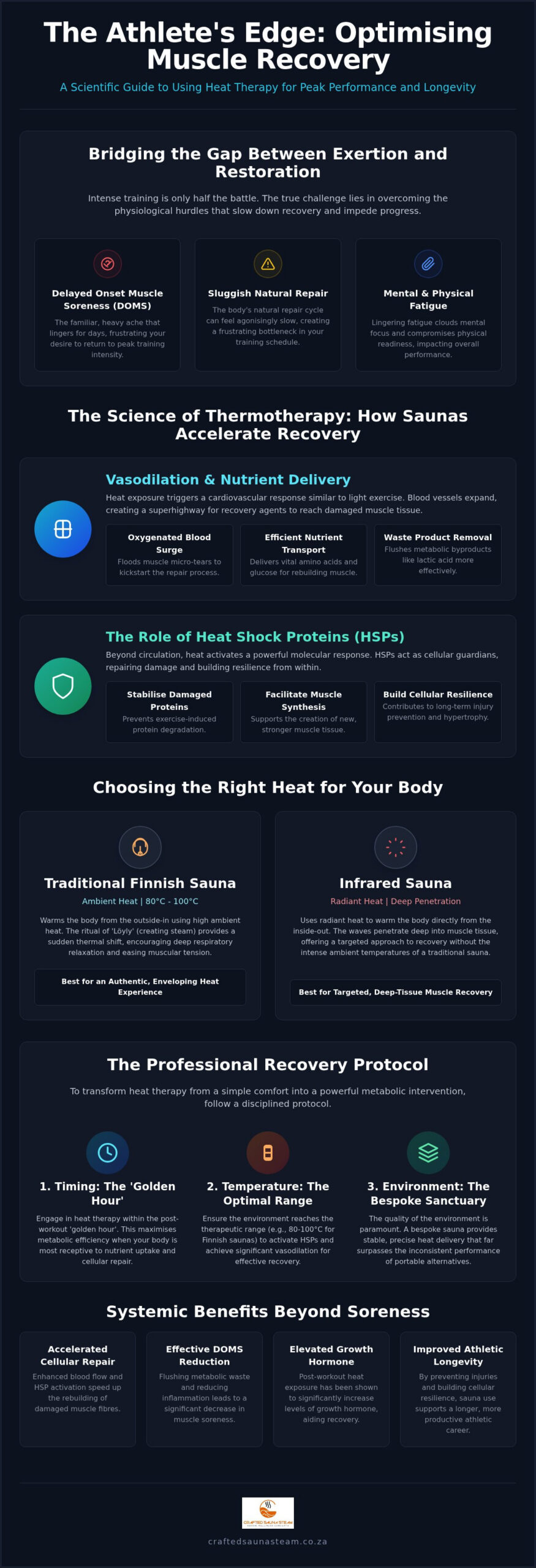
Thermotherapy is far more than a simple comfort; it’s a sophisticated biological trigger that initiates cellular repair and enhances metabolic efficiency. Using a sauna for muscle recovery creates a controlled environment where heat acts as a catalyst for restoration. This process isn’t accidental. It’s a deliberate manipulation of the body’s thermoregulatory systems to shorten the window between intense exertion and peak readiness. By subjecting the body to a specific thermal load, we can bypass the sluggishness of natural repair cycles and engage a more profound level of restoration.
Vasodilation and Nutrient Delivery
When you step into a heated cabin, your core temperature rises, prompting the heart to increase its stroke volume. This reaction mimics the effects of light cardiovascular exercise whilst you remain in a state of physical repose. As the heart rate climbs, blood vessels throughout the body begin to expand. This widening, or vasodilation, allows a surge of oxygen-rich blood to reach the micro-tears in your muscle fibres caused by heavy lifting or endurance training. Vasodilation is the primary driver of rapid post-workout nutrient transport.
By increasing the diameter of the vessels, the body can deliver amino acids and glucose more efficiently to the areas that need them most. The Science of Thermotherapy highlights how this improved circulation also aids in the removal of metabolic byproducts. Lactic acid, often blamed for that heavy, sluggish feeling after a session, is flushed from the muscle tissue more effectively through this heightened circulatory state. This ensures that the building blocks of repair are delivered with precision whilst waste is removed with speed.
The Role of Heat Shock Proteins
Beyond simple circulation, the heat of a bespoke sauna triggers a molecular response known as the release of Heat Shock Proteins (HSPs). These specialised proteins act as cellular guardians. When muscle fibres are stressed through exercise, proteins can become misfolded or damaged. HSPs step in to stabilise these structures, preventing protein degradation and facilitating new muscle synthesis. This molecular repair work is essential for anyone looking to use a sauna for muscle recovery as a serious training tool.
The long-term benefits of this process are significant for muscle hypertrophy and injury prevention. Consistent exposure to thermal stress builds a form of cellular resilience amongst high-performance athletes. By protecting the integrity of muscle proteins, HSPs ensure that the body doesn’t just recover; it returns stronger. The efficacy of this recovery depends heavily on the precision of the heat. A custom-built environment, often powered by high-performance Narvi heaters, ensures the temperature remains within the optimal range for HSP activation, turning a simple session into a powerful metabolic intervention.
Traditional Finnish vs. Infrared: Choosing the Right Heat for Your Body
Selecting the ideal thermal environment is a nuanced decision that depends heavily on your specific training demands. It isn’t merely about enduring high temperatures; it’s about the method of heat delivery to your tired muscles. Traditional Finnish saunas and modern infrared systems offer two distinct pathways to restoration. Whilst both serve the same goal, their interaction with your physiology differs significantly. One provides an enveloping, ambient experience, whilst the other offers a targeted, radiant approach.
The Traditional Ritual with Narvi Technology
Traditional saunas rely on ambient heat to warm the body from the outside in. These rooms typically operate between 80°C and 100°C, creating a dry, intense heat that is periodically softened by the ‘Löyly’—the steam produced by pouring water over hot stones. This ritualistic steam doesn’t just feel indulgent. It facilitates deep respiratory relaxation and eases muscular tension through a sudden thermal shift that encourages the body to release built-up stress. To achieve this level of authenticity, the precision of Narvi sauna heaters is essential. These heaters are engineered to maintain stable, therapeutic temperatures, ensuring the environment remains conducive to repair rather than just heat exposure. The sensory combination of traditional timber and aromatic steam provides a mental reset that is often missing from more clinical recovery methods.
Deep Tissue Penetration with Full-Spectrum Infrared
Infrared technology offers a more targeted approach. Instead of heating the air, full-spectrum infrared waves penetrate the skin to heat the body directly. These waves can reach up to 4cm into the neuromuscular system, addressing inflammation and micro-tears at their source. This makes an infrared sauna for muscle recovery particularly effective for athletes who require deep tissue relief without the intensity of a 100°C environment. Because infrared saunas operate at lower temperatures, typically between 49°C and 65°C, users can enjoy longer sessions. This allows the core temperature to rise steadily, inducing a sweat profile that is often more toxin-dense than that of a traditional room. For those who demand the best of both worlds, the hybrid sauna represents the pinnacle of bespoke technology. It allows you to toggle between the intense ritual of Finnish steam and the deep-penetrating precision of infrared light. If you are ready to elevate your post-workout routine, exploring custom sauna solutions can help you find the perfect balance for your body’s needs.
Beyond Soreness: Systemic Benefits of Post-Workout Heat Exposure
The true power of heat extends far beyond the immediate relief of a tight muscle or a sore lower back. Whilst the physical delivery of warmth is essential, the systemic impact on your internal chemistry is where the most profound transformations occur. Using a sauna for muscle recovery triggers a fundamental shift in your nervous system. Intense training keeps you in a sympathetic state, characterised by high cortisol and constant alertness. Stepping into a thermal sanctuary forces a transition into the parasympathetic state, the rest and digest mode where actual biological repair happens. It’s about equilibrium.
Reducing DOMS and Inflammation
Delayed Onset Muscle Soreness (DOMS) often dictates the frequency and intensity of your training schedule. Heat therapy mitigates this discomfort by exerting a powerful anti-inflammatory effect on both joints and muscle tissues. Specifically, regular heat exposure has been shown to reduce the concentration of C-reactive protein in the blood, a key marker of systemic inflammation. This reduction in chemical stress allows the body to focus its energy on synthesis rather than just damage control. When deciding between a sauna vs steam room for this purpose, consider that the dry, intense heat of a traditional or infrared room often allows for the specific temperature thresholds required to trigger these systemic responses most effectively.
The Growth Hormone Spike
One of the most compelling reasons to integrate a sauna for muscle recovery is the significant hormonal response it elicits. Research indicates that sessions of intense heat exposure can lead to a surge in growth hormone levels. Some studies have recorded increases of 200 to 300 per cent following specific thermal protocols. This spike is a critical asset for athletes looking to maintain lean muscle mass whilst accelerating the repair of connective tissues. There is a powerful synergy between exercise-induced hormones and those triggered by heat. When these two forces combine, the body enters a hyper-recovery phase that traditional rest alone cannot replicate.
Finally, the cooling process that follows a session signals to the brain that it’s time for deep, restorative sleep. By regulating your body’s internal thermostat, you ensure that your circadian rhythm is optimised for rest. Sleep remains the ultimate recovery tool, and a bespoke sauna environment ensures that every hour spent in bed is maximised for cellular renewal. This holistic approach ensures you don’t just feel better; you perform with greater precision and longevity.
The Professional Recovery Protocol: Optimising Your Sauna Sessions
To truly harness the benefits of a sauna for muscle recovery, one must move beyond casual use and adopt a structured protocol. Precision is the hallmark of the professional athlete; the same discipline should apply to your restoration ritual. The most critical factor in this process is timing. Accessing your thermal environment within the ‘golden hour’—the sixty minutes following your final set or mile—is ideal. During this window, your metabolic rate remains elevated, and your circulatory system is primed to respond to the vasodilation effects of intense heat, ensuring that repair mechanisms are engaged immediately.
Timing, Temperature, and Duration
The duration of your session should be dictated by the type of heat used and your personal tolerance. For those utilising traditional electric saunas, a period of 15 to 20 minutes at temperatures between 80°C and 90°C is recommended. This high-intensity ambient heat provides a powerful stimulus for the cardiovascular system. Conversely, when using an infrared sauna, the session should be extended to 30 or 45 minutes at a lower range of 50°C to 60°C. This allows the radiant waves to penetrate deeply into the neuromuscular system without over-taxing the body. It’s essential to listen to your biological cues. If you feel lightheaded or excessively fatigued, your body is signalling that the cardiovascular load is sufficient. Discipline in recovery means knowing when to step out as much as when to step in.
Hydration and Remineralisation
In the South African climate, the physiological cost of sweating is high. A single session can result in significant fluid loss, which must be meticulously replaced to maintain muscular function and blood volume. Aim to consume between 500ml and 1 litre of water for every twenty minutes spent in the heat. However, water alone is insufficient. Remineralisation is vital. You must replenish essential electrolytes, specifically sodium, potassium, and magnesium, which are lost through perspiration. These minerals are the electrical conductors of your nervous system; without them, muscle cramps and fatigue will persist regardless of the heat therapy. A post-sauna cooling ritual, such as a lukewarm shower or a dedicated rest period in a temperate space, helps to stabilising your heart rate and blood pressure before you return to your daily activities.
For those seeking the ultimate edge, ‘Contrast Therapy’ offers a sophisticated variation. By alternating ten minutes of heat with two minutes of cool-down periods, you create a ‘pump’ effect in the circulatory system, further accelerating the removal of metabolic waste. This rhythmic transition between environments is a staple of Nordic wellness and is easily achieved within a well-designed home sanctuary. If you are ready to integrate these professional standards into your own training regime, explore our bespoke sauna installations to create a recovery environment tailored to your exact requirements.
Designing a Bespoke Recovery Sanctuary
A professional recovery protocol is only as effective as the environment in which it’s performed. Whilst portable or tent-based units offer a low-cost entry point, they often fail to maintain the thermal stability required for consistent physiological repair. These temporary solutions struggle with heat leakage and lack the thermal mass necessary to trigger the deep metabolic responses discussed earlier. For the dedicated athlete, a bespoke sauna for muscle recovery is not a luxury; it’s a piece of essential training equipment. It provides a controlled, high-performance space where variables like humidity and temperature are managed with absolute precision.
The Integrity of Materials
The foundation of any superior sauna lies in the quality of its timber. We exclusively utilise sustainable Nordic woods, such as spruce and aspen, which are specifically chosen for their ability to manage extreme heat and humidity without warping or degrading. These timbers do more than provide structural integrity; they enhance the sensory experience. The subtle, clean aroma of Nordic wood aids in the mental transition from exertion to tranquility. In the diverse South African climate, where coastal humidity or Highveld dryness can challenge lesser materials, artisanal construction ensures your sanctuary remains a durable haven for decades. Every joint and bench is a testament to the meticulous detail required to elevate a room into a genuine restoration sanctuary.
Integrating Narvi Technology
Precision is found in the heart of the sanctuary: the heater. As the exclusive importer of Narvi heaters in South Africa, we provide access to the gold standard of Finnish engineering. These units are favoured by those who demand absolute reliability. When choosing a home sauna, your selection should reflect your training volume and recovery needs. Narvi technology allows for the exact temperature control necessary to target specific goals, whether you are seeking the intense ambient heat of a traditional session or the steady, radiant warmth of a hybrid system. This level of control ensures that your body receives the exact thermal load required to optimise growth hormone release and reduce inflammation. To begin your journey toward a scientifically-backed post-workout ritual, contact our specialists to design your bespoke recovery sanctuary and ensure your athletic longevity is supported by the finest craftsmanship available.
Elevate Your Restoration Ritual
Mastering the art of recovery is what separates the dedicated athlete from the casual enthusiast. We’ve explored how a professional protocol, grounded in the science of thermotherapy and hormonal optimisation, can fundamentally shift your body from a state of stress to one of profound repair. By utilising a bespoke sauna for muscle recovery, you aren’t just easing temporary soreness; you’re investing in the long-term longevity of your physical performance and mental clarity. It’s a commitment to your body’s future.
True restoration requires an environment that matches the intensity of your training. As the exclusive South African importer of Narvi heaters, we specialise in creating custom-built wellness solutions that bring authentic Nordic engineering into the heart of your home. Whether you require the deep-penetrating waves of full-spectrum infrared technology or the ritualistic intensity of a traditional Finnish room, our expertise ensures your sanctuary is crafted with artisanal precision. Design your bespoke recovery sanctuary with Crafted Sauna Steam to transform your post-workout downtime into a period of intentional renewal. Your body has earned the right to recover in an environment designed for excellence.
Frequently Asked Questions
Is it better to use the sauna before or after a workout for muscle recovery?
Post-workout use is significantly more effective for restoration and cellular repair. Whilst a pre-workout session can help warm the muscles and improve range of motion, the physiological repair mechanisms, such as the release of growth hormones and the activation of heat shock proteins, are most beneficial during the cooling-down phase. Using a sauna for muscle recovery after exercise ensures that your body transitions into the parasympathetic state required for deep renewal.
How long should I stay in the sauna for optimal muscle repair?
Optimal duration depends entirely on the heat source and your personal heat tolerance. For a traditional electric sauna, 15 to 20 minutes at high heat is sufficient to trigger the desired circulatory response. In contrast, an infrared session should last between 30 and 45 minutes to allow the radiant waves to penetrate the deeper layers of muscle tissue. Always prioritise the quality of the session over mere endurance.
Can using a sauna help prevent sports injuries?
Regular heat exposure contributes to injury prevention by enhancing the elasticity of connective tissues and maintaining cellular integrity. By consistently stimulating the production of heat shock proteins, you protect your muscle fibres from degradation during high-intensity training. This increased flexibility and cellular resilience mean your body is better equipped to handle the physical demands of your sport without succumbing to strains or tears.
How many times a week should an athlete use a sauna?
Frequency is just as important as duration, with three to five sessions per week providing the most consistent benefits. This cadence allows the body to adapt to thermal stress, improving cardiovascular efficiency and metabolic waste removal over time. For high-performance athletes, integrating these sessions into the weekly schedule ensures that recovery keeps pace with training intensity, preventing the accumulation of chronic fatigue.
What is the difference between a traditional sauna and an infrared sauna for recovery?
The primary difference lies in the method of heat delivery to the body. Traditional saunas use ambient heat to warm the air around you, creating an intense, enveloping experience that is ideal for systemic relaxation. Infrared saunas use radiant waves to heat your body directly, allowing for deeper tissue penetration at lower, more manageable temperatures. Both are effective, though your choice should depend on whether you prefer a traditional ritual or targeted deep-tissue relief.
Are there any risks to using a sauna after an intense workout?
The main risks involve dehydration and potential cardiovascular strain if you don’t hydrate properly. Since your heart rate is already elevated from exercise, the additional thermal load requires careful management. It’s vital to replenish fluids and electrolytes immediately and to avoid staying in the heat if you feel lightheaded. A gradual cooling period after your session is essential to stabilise blood pressure and heart rate.
How does sauna use impact muscle growth and hypertrophy?
Sauna use supports hypertrophy by creating a hormonal environment conducive to muscle synthesis. The significant spike in growth hormone levels, combined with the action of heat shock proteins, helps to reduce muscle protein breakdown after training. This ensures that the effort you put into your sessions results in maximum gains, as the body remains in an anabolic state for longer periods after the heat exposure.
Should I choose a sauna or a steam room for muscle soreness?
A sauna is generally the superior choice for addressing deep-seated muscle soreness and systemic recovery. Whilst a steam room provides excellent surface-level relaxation and respiratory benefits, it often cannot reach the high temperatures required to trigger the deeper hormonal and cellular repair mechanisms found in a traditional or infrared sauna. For athletes focused on performance and longevity, the dry heat of a sauna provides a more robust therapeutic stimulus.
Pingback: How to Choose a Home Sauna: A Sophisticated Guide to Premium Wellness
July 26, 2026[…] benefits. Athletes seeking to reduce Delayed Onset Muscle Soreness will find that a dedicated sauna for muscle recovery accelerates cellular repair and optimises systemic restoration between training sessions. For a […]